

Lemony Rice and Orzo
https://youtu.be/c3k_j-Zx3rE?si=TVP5J9YtUwrGWLTi
What's for dinner? That's the daily question. It's not hard to think of the main event, but coming up with sides tends to be really hard - especially when you are working with a CKD eating plan. Well, here's an easy, delicious, and very CKD-friendly dish. This is Lemony Rice and Orzo and it's a recipe I reverse engineered from my favorite Greek restaurant. This dish does require a little patience and during the first stages of cooking, you really need to stay with the pot. I serve this with oven roasted chicken legs that have been marinated in vinaigrette dressing because both dishes take about 30 minutes from start to finish - so dinner comes out at the same time...BONUS! This recipe serves 8! Oh, and the vinaigrette recipe is right underneath the rice recipe! Enjoy!
CKD Buddies K+ 75 mg, PHO 14mg, PRO 3g
DASH Buddies: 1BR per half cup serving.
Recipe:
2 tablespoons olive oil
1 small onion (or 1/2 medium onion)
1 cup uncooked white rice
1 cup uncooked orzo
2 cloves of finely chopped garlic
4 cups of liquid; water, chicken broth, vegetable broth, a mixture of wine and either water or chicken broth...liquid
1 teaspoon of salt
1/2 teaspoon each black pepper, oregano, thyme, and parsley
the zest and juice of 1 whole lemon
Instructions:
In a medium sauce pan, heat the olive oil to shimmer. Add onions and cook for a minute or two. Add the garlic and cook a minute longer.
Add your rice and cook, stirring often, until it has turned white and is starting to brown, then add the orzo. Brown these, stirring often but not constantly, until they turn brown - not dark brown, just a couple of shades darker than their normal state. Basically, brown it just to the point where you are uncomfortable and not a second longer. Burned wheat and rice are nasty and bitter and cannot be salvaged!
Next, add in your 4 cups of liquid and your spices. I like to add a tablespoon of plant based butter to mine at this point. This is optional, but it does make it taste more like the restaurant! Bring this up to a good boil, then turn the heat down to low, cover and steam until the liquid is gone. Once the liquid is cooked out, add the lemon zest and juice, then let it sit for 5-10 minutes before serving. Der-Luscious!
Vinaigrette di Sparks:
50% olive oil
25% red wine vinegar
25% apple cider vinegar
1 clove of garlic per cup of liquid, minced finely
1 teaspoon of your favorite Italian Seasoning per cup of liquid
Savory Bread Pudding with Chick Pea Tempeh Breakfast Sausage
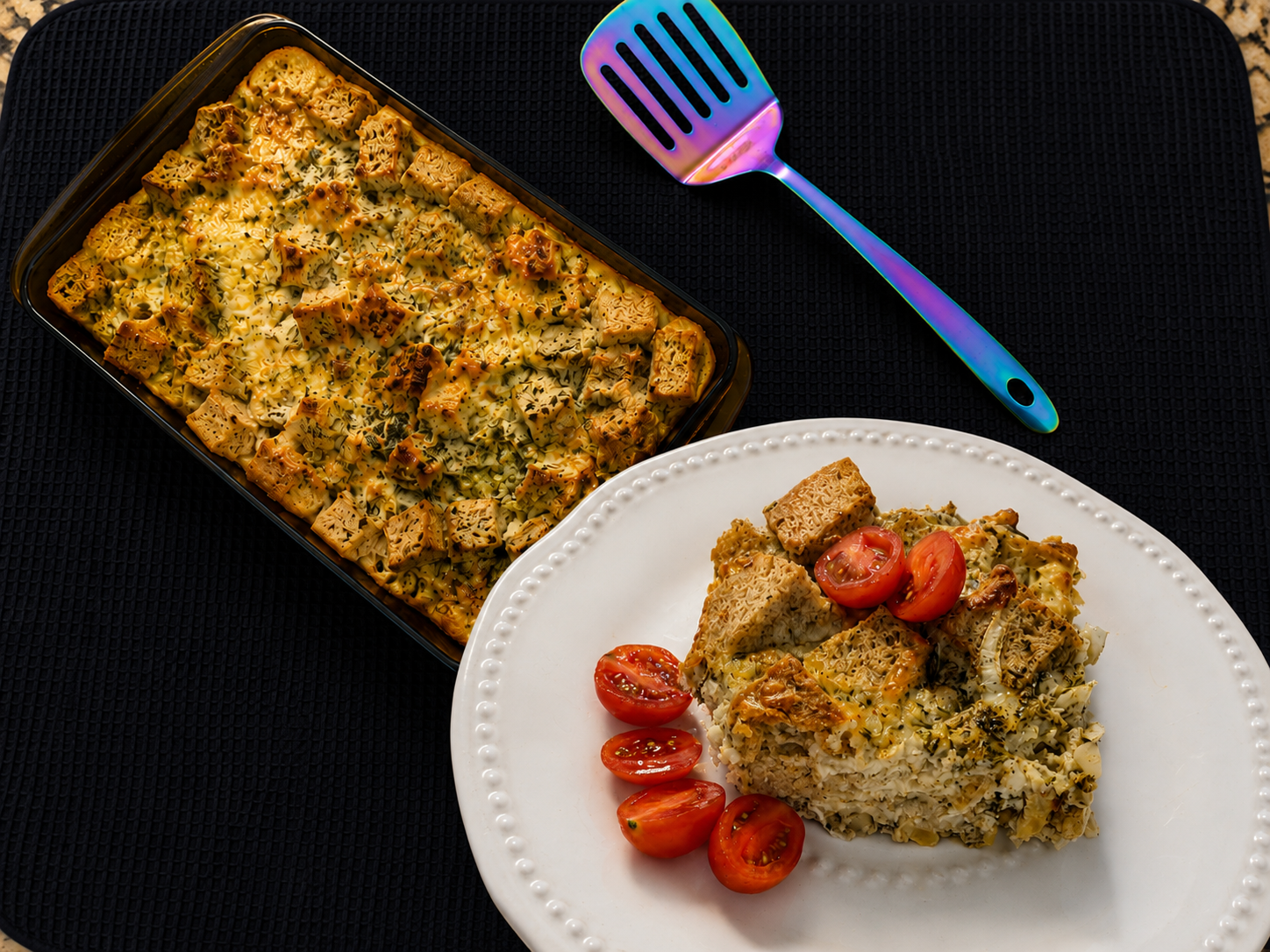
Bread pudding is always so nice. It sounds so hard to make, but it’s really not. It is economical, can be made with any bread, any milk or milk substitute, add veggies, add cheese or meat, make it sweet, sweeten it with maple syrup…add fruit. It will not fail you, and it keeps your tummy full while staying on our CKD eating plan. Perfect!
https://youtu.be/UvQvPc-J0WY?si=PvZ_1ucsHaF6MniJ
Bread Pudding is just comforting. I am not listing the counts for my CKD and Dash Buddies on this because the count will change depending upon the type of bread you use, the type of milk or milk substitute you use, and also the type of meat you use - if you opt to use any at all. The thing to remember is that it's 6 eggs to 2 cups of milk for 9 servings. Whether you sweeten this with your favorite sweetener, add fruit or preserves, or you make it savory with veggies and cheese, the custard portion remains the same. Here's what I used for the video.
350 degree preheated oven, greased 9 x 13 pan. Serves 9.
4 cups of cubed, preferably stale bread, and the heavier the bread, the better the pudding - also, leftover hamburger and hotdog buns work well, but it takes a lot of them.
6 eggs
2 cups of milk or milk substitute
1 cup of shredded cheese
1 medium onion
7 ounces of chick pea tempeh breakfast sausage
2 tablespoons olive oil
1 medium onion (about a cup)
2 cloves of garlic - *garlic as you wanna garlic!
1/2 tsp salt
1/2 tsp pepper
1 tablespoon of fresh rosemary or 1/2 tablespoon dried rosemary
In a large bowl, add your milk, eggs, cheese, and spices and whisk them together, then add in your cubed bread and mix to coat. Allow the bread mixture to soak for at least 15 minutes. An hour is better and overnight is the best. Then, put the oil in a skillet and heat it up on medium heat. Add in your onions and sauté until soft. Add in the garlic (sliced or minced, your choice) along with the sausage if you are using it and cook until the sausage is cooked through. If you are not using sausage, cook just until the onions start to get translucent. Add the onion mixture to the bread mixture and give it a quick mix. Pour the mixture into a greased 9 x 13 pan and bake at 350 degrees. You will know the bread pudding is done when you tap the side of the pan and the pudding shakes but does not wobble. I bake mine for 30 minutes, give it a check, and if it's not done, I put it in for 10 minutes and check it again. Once done, allow it to sit out for 10-15 minutes. This dish is best served warm and not hot. Enjoy!
Here's a nice breakfast sausage seasoning recipe. This makes enough to season 1 pound of meat - and you can use whatever ground meat you like. It works exceptionally well with chicken, turkey and pork. In the video, I used chick pea tempeh because it is lower in potassium, phosphorus, and protien. If you opt for the tempeh, remember that it comes in 7 ounce packages, so you will need cut the recipe in half or use two packages of tempeh. Whichever you choose, you can portion it out into servings and freeze it to use later!
Recipe
1 1/2 teaspoon of sage
1 teaspoon of salt
1 teaspoon of black pepper
1/4 teaspoon crushed red pepper flakes
1 1/2 teaspoon of thyme
1 teaspoon of paprika
1/4 teaspoon of allspice (or nutmeg if you prefer)
1 clove of garlic
1 1/2 teaspoon packed brown sugar (or maple syrup, or molasses...yummm)
1 tablespoon of olive oil
Place your meat or tempeh in a bowl (or a sealable baggie). Add in the spices and munch them all together. You can use it straight away, but it's better if you let it flavor-meld for about an hour, overnight is even better!
MMMMM! Berry Shortcake!
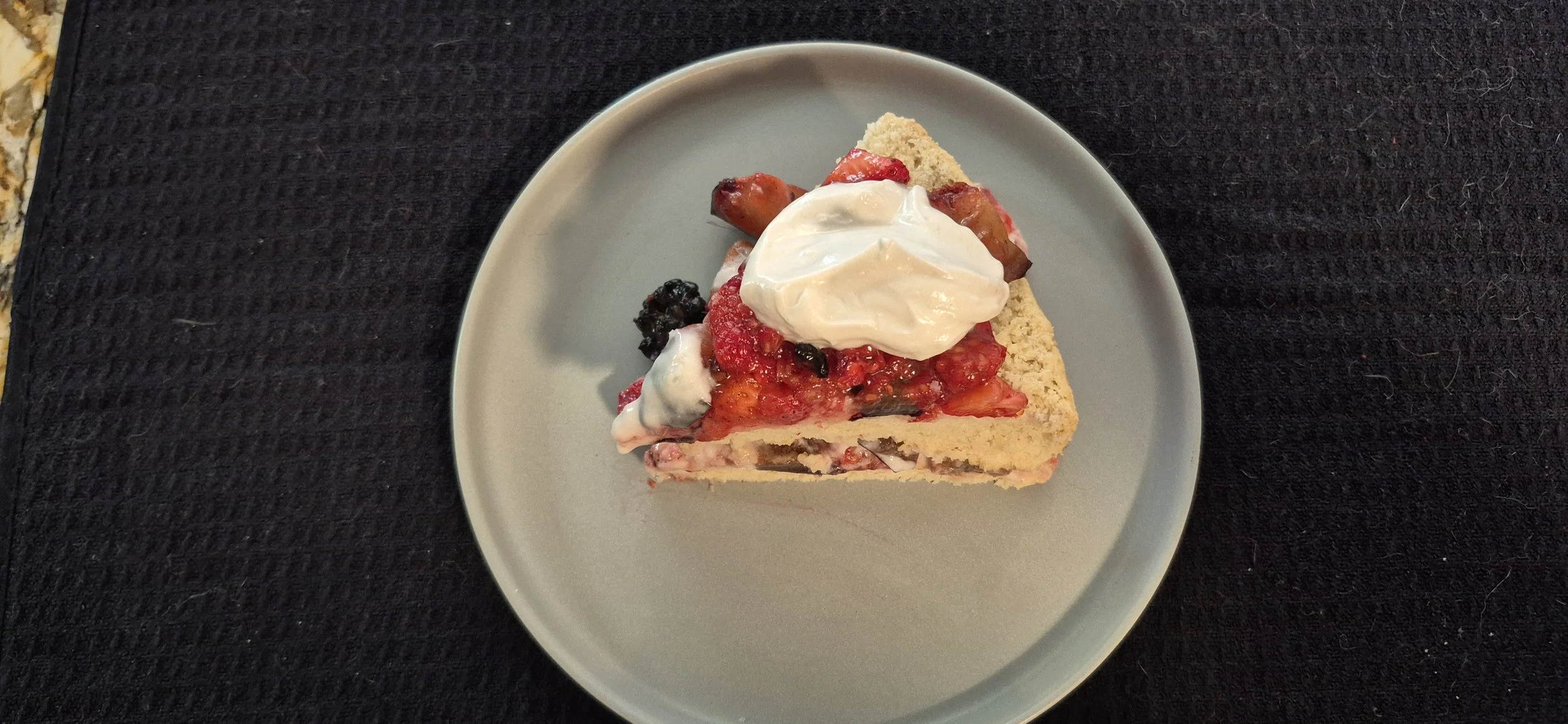
So refreshing! It’s not actually a cheat; it’s a TREAT!
https://youtu.be/ESiuNFaNaOw?si=gXgyXN19cYkZfVxn
Berry Short Cake - the most refreshing treat on the planet!
This is one of my favorite treats. It is sweet enough to satisfy that hankering, but does not have very much sugar at all. Actually, you needn't add the sugar or can substitute your favorite artificial sweetener (1 tablespoon of sugar is 1 TEASPOON of artificial sweetener). Also, this recipe uses a classic 1-2-3-4 biscuit recipe which can also be used to make scones, dumplings, ladyfingers, and a whole slew of other confections. For the fruit, fresh berries and stone fruit work the best, but frozen is always wonderful.
Biscuit Recipe:
8 servings:
CKD Buddies: K+ 80mg PHO 50g PRO 3
DASH Buddies: 1 BR, 1 FA
425 degree preheated oven, greased cake pan, pie pan, oven-proof skillet, cookie sheet...something to bake on.
2 cups of flour
1 stick of margerine/butter (1/2 cup) - cold and cut into cubes
4 teaspoons baking POWDER
3 (up to 3, actually) tablespoons sugar
1 scant teaspoon of salt
Up to 1 cup of milk or your favorite non-dairy milk-like product - I use Silk Cashew Milk
In a large bowl, sift together all of the dry ingredients, or dump all of the dry ingredients into the bowl and mix together with a whisk for about 30 seconds. Add your margarine/butter and squish it all together until every bit of flour is coated in margarine/butter, and vice versa. It's always described as looking like shag or peas...it's neither. It should more resemble the texture of damp sand. Add in your milk or milk-like product. It is fine to use 3/4 cup of liquid to roll out or hand shape your biscuits or to smash the dough into a pan with your fingers. Add the full cup if you want to drop the biscuits into a pan (or pot of chicken soup) or spread it in a pan with a spoon. Bake for 15-18 minutes and is done when a toothpick comes out clean and the top is golden.
Macerated (Sweetly Marinated) Berries:
Serves 8
CKD Buddies: The count for this is dependent upon the fruit you are using. Please go by the food guide that your dietician recommended to you.
DASH Buddies: 1 FR
Recipe
4 cups of your favorite berries, stone fruit, mixed berries, or mixed berries and stone fruit. Frozen mixed berries are da' bomb for this.
Rosmirtha Sparkle — 8/6/2026 9:09 PM
1 tablespoon of sugar or 1 teaspoon of your favorite artificial sweetener
1 tiny pinch of salt
The zest and juice of 1 tangerine - or lemon
1 tablespoon of fruit jelly, jam or spread (berry or grape work best) warmed just enough to be a liquid
*(optional) which you can mix with 1 tablespoon of melted margarine/butter
Cut your mixed fruit so it is all similar in size - so if you are using peaches and blueberries, cut the peaches to about blueberry size
Mix all the ingredients together in a bowl. Cover the bowl with either a lid or plastic wrap and let sit for at least 30 minutes and up to 4 hours.
Voila - Macerated Fruit to spoon over your biscuit "shortcake."
Red Chili Chicken Enchiladas
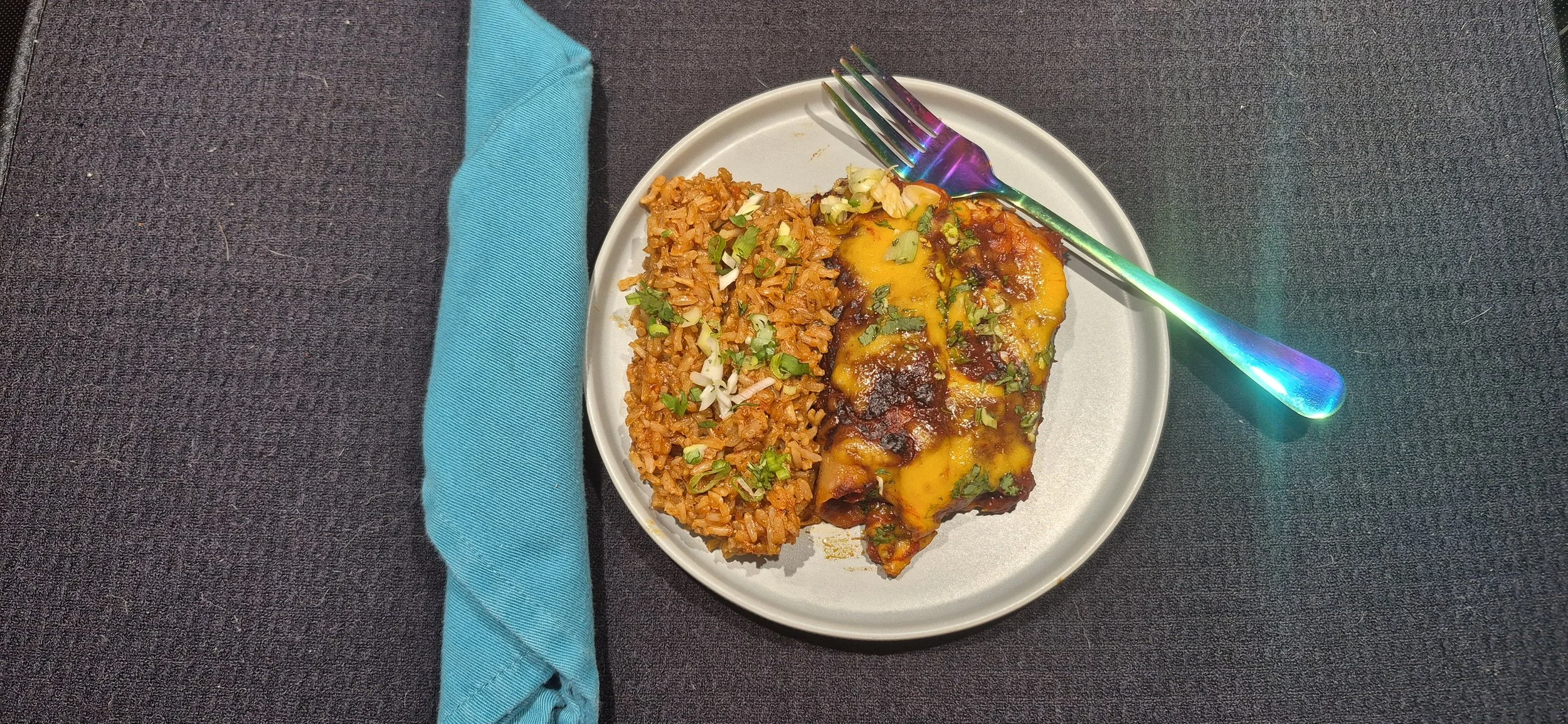
So de-lish…so good for the soul!
MMMMMMM! Red Chili Enchiladas! For me, this is home; absolute comfort. In America, we associate red sauce with being made from tomatoes or being some type of salsa, but it very much is not. First, it is not tomato based at all and secondly, it is more like a gravy - but it's not exactly gravy. Gravy is thickened from a flour/fat mixture (a roux) or from a cornstarch liaison, this sauce is thickened naturally by the power of chilis. Yes, you can use a bit of flour if you need to tighten up your sauce, but it is not really needed. This red sauce recipe was a gift given to me from my high school sweetheart's mother and you best believe I've handed it down to my little dumplings! But let's also talk about fillings, shall we?
There are a bajillion things to fill enchiladas with. Meat, cheese, spinach, tofu...if you can imagine it, it will work. The recipe we are making today is a creamy and very mild green chili chicken filling which is "bulked up" with oyster mushrooms to lower the protein count. If mushrooms take you over your daily count, I have also used yellow squash, collard greens (of course, as if you doubted that), I also tried canned green beans which worked flavor-wise, but was texturally displeasing. Maybe if I used the julienne cut beans...well, there's always that.
Rich and Mild Red Enchilada Sauce
Recipe yields about 3 cups, which will cover 20 enchiladas and leave enough to make some seriously tasty Mexican rice! Don't be bowled over by the total count. There is also the "Per Serving" count.
CKD Buddies: Total Recipe: K+1007mg PHO 97mg PRO 1g (if you use chicken broth)
CKD Buddies Per serving: K+ 51mg PHO 5mg PRO 0g
DASH Buddies: 1/2 Veg
7 dried guajillo chilis - seeded
2 dried pasilla chilis - seeded
1 dried California red chili - seeded
2 cups of water (or chicken broth)
1 clove of garlic
1/2 teaspoon granulated garlic
1 teaspoon oregano
1/2 teaspoon salt
1/8 teaspoon cocoa powder - yes, really
1 teaspoon cumin powder
1 tablespoon oil
Salt and pepper to taste
Yes, you can put a little onion in as well, if you'd like. It's not included in the count, but you can absolutely do it!
A scant bit of flour if your sauce needs thickening - but only if!!
Place everything in a pot and over high heat bring it to a boil. Lower the heat and simmer for 15-20 minutes. Pour everything in a blender (liquidizer) or use one of those handy emersion blenders and whir until smooth. It will not be gravy thick, it will thicken up when you bake the "whole enchilada."
Oh - this is a VERY MILD sauce, don't let all of the chilis make you nervous.
Enchilada Filling:
Fills 20 small tortillas - this count does NOT include the tortilla
CKD Buddies - for 1 enchilada: K+ 58mg PHO 35mg PRO 3g
DASH Buddies - for 1 enchilada: 1PR, 1V, 1/2 Milk, 1FA
1 cup cooked, shredded chicken (no skin, no bones)
1 cup oyster mushrooms* Included in count, but can be substituted
1/2 cup canned green chilis (not jalepenos...goodness no!)
1/2 cup (about 1/2 of a medium) onion
1/2 cup sour cream
1/2 cup shredded cheddar cheese - more if your daily points let you!
4 ounces cream cheese - room temperature
1/2 teaspoon each: salt, pepper, cumin, red chili powder
1 tablespoon olive oil
Place the oil and onion in a small pan and set on medium high heat. Cook the onion for about 3 minutes and then add in your mushrooms (or whatever other veggie you have decided to use). Cook just to soften; no need to cook it through. Place this in a large bowl along with all of the other ingredients and mix until well blended. You are now ready to fill your tortilla of choice, smother them in your fabulous sauce, top them with some extra cheddar (if you choose to), then over your pan of enchiladas with foil and bake them for about 30 minutes. Let cool for 10 minutes before serving. De-Lish!
Matzo Brei - Not Pretty, but sooo de-lish!
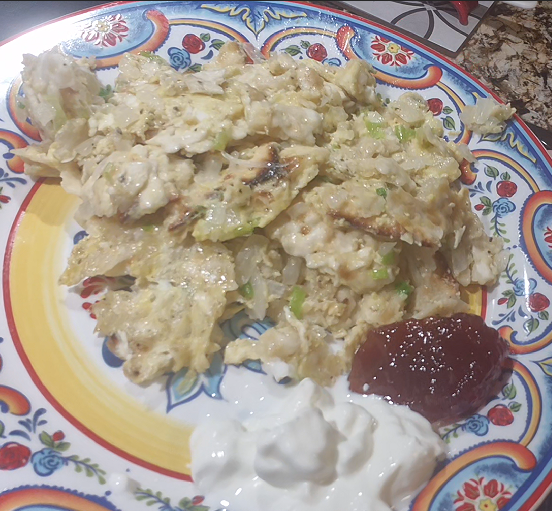
This is a Sparkle Family Favorite. My dad used to make this for breakfast at family gatherings. It's a very simple, economical, and CKD friendly dish and it's a good "anytime meal."
CKD Buddies: K+ 152mg, PHO 158mg, PRO 9g
DASH Buddies: 1 PRO, 1BR, 1FA 1/2 Veg
Recipe: Well. it's pretty basic. It's one egg and one matzoh board per person - so you can adapt it accordingly.
As prepared in the video - for 2 servings:
2 eggs
2 matzo boards - I used lightly salted matzos
3 green onions, chopped finely
1/2 cup finely diced onion - use your favorite variety
1 tablespoon olive oil (or margarine, or butter...you choose)
A tiny dash of nutmeg
Salt and pepper to taste
Ogreskin (Cucumber and Garbanzo Bean) Salad
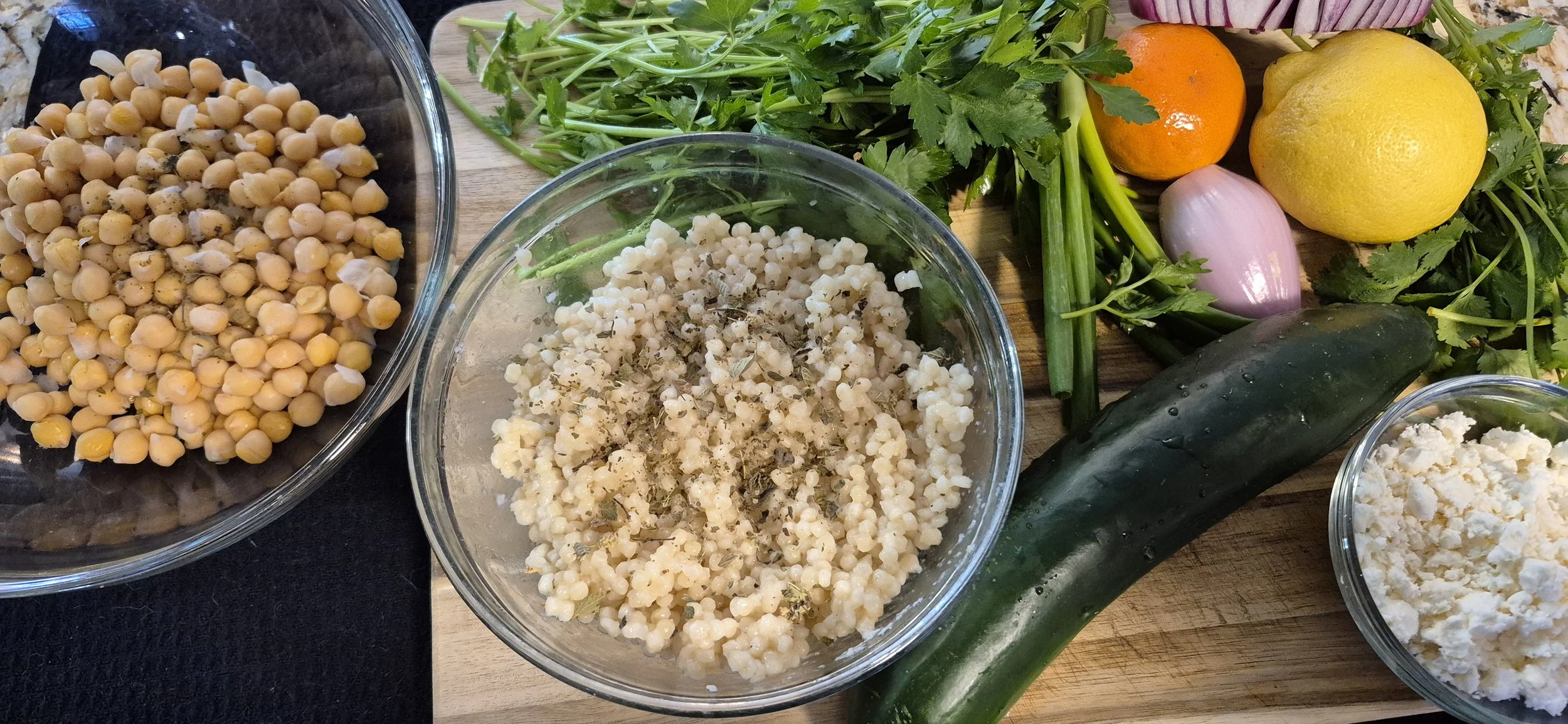
Not the prettiest of salads, but certainly one of the tastiest!
This Greek influenced spoon salad is both refreshing and satisfying. It’s cool and fresh, but hearty with couscous and garbanzo beans. A cinch to prepare, but do make it ahead of time so it can flavor meld for a couple of hours. It’s better the next day and will hold well in the fridge for a few days. Perfect for hot days, but I’m not gonna lie, I’ve warmed it up in the microwave…and it was still A-MAZING!
Cucumber, Garbanzo, and Couscous (Ogre Skin) Spoon Salad
Serves 8
CKD Buddies: K+ 196mg PHO 72g PRO 6g
DASH Buddies: 2V, 2PR, 1FA
Salad:
2 cup washed, peeled, and chopped cucumber
1 15.5oz can of garbanzo beans - drained, leached*, and rinsed to cool
2 cups cooked israeli couscous (no oil, butter, or flavorings added, please)
½ cup chopped scallion (green onion, spring onion…same-o same-o)
½ cup finely chopped onion (red, white, yellow, shallot…it’s all great!)
1 tangerine, peeled and chopped fine ~OR~
10 sections of canned - in juice or water - mandarin orange (drink the juice, then put the rest in some dessert gelatin so you can have a sweet treat later on!)
½ cup chopped cilantro (This is optional. You can substitute parsley, but it raises the K+ count quite a bit.)
½ cup chopped fresh parsley
1 oz feta cheese
Juice of 1 lemon
¼ cup your favorite Italian Dressing
Dressing:
½ cup vinegar - any type you like. I like to mix cider vinegar and red wine vinegar…bright and sparkly!
½ cup olive oil
1 tsp dijon mustard
1 clove of garlic, minced finely or put through a garlic press
Fresh or dried oregano, thyme, and rosemary or your favorite Italian seasoning
Salt and pepper to taste
Some tips for dialing the flavor up to 11:
Make the dressing first
Let your couscous and garbanzos marinade in it while you chop your freshies and put the salad together
Put your marinating starches in the fridge…rice, pastas and legumes can grow nasty bacteria really quickly! Food safety is always a priority!
I Love You Soup
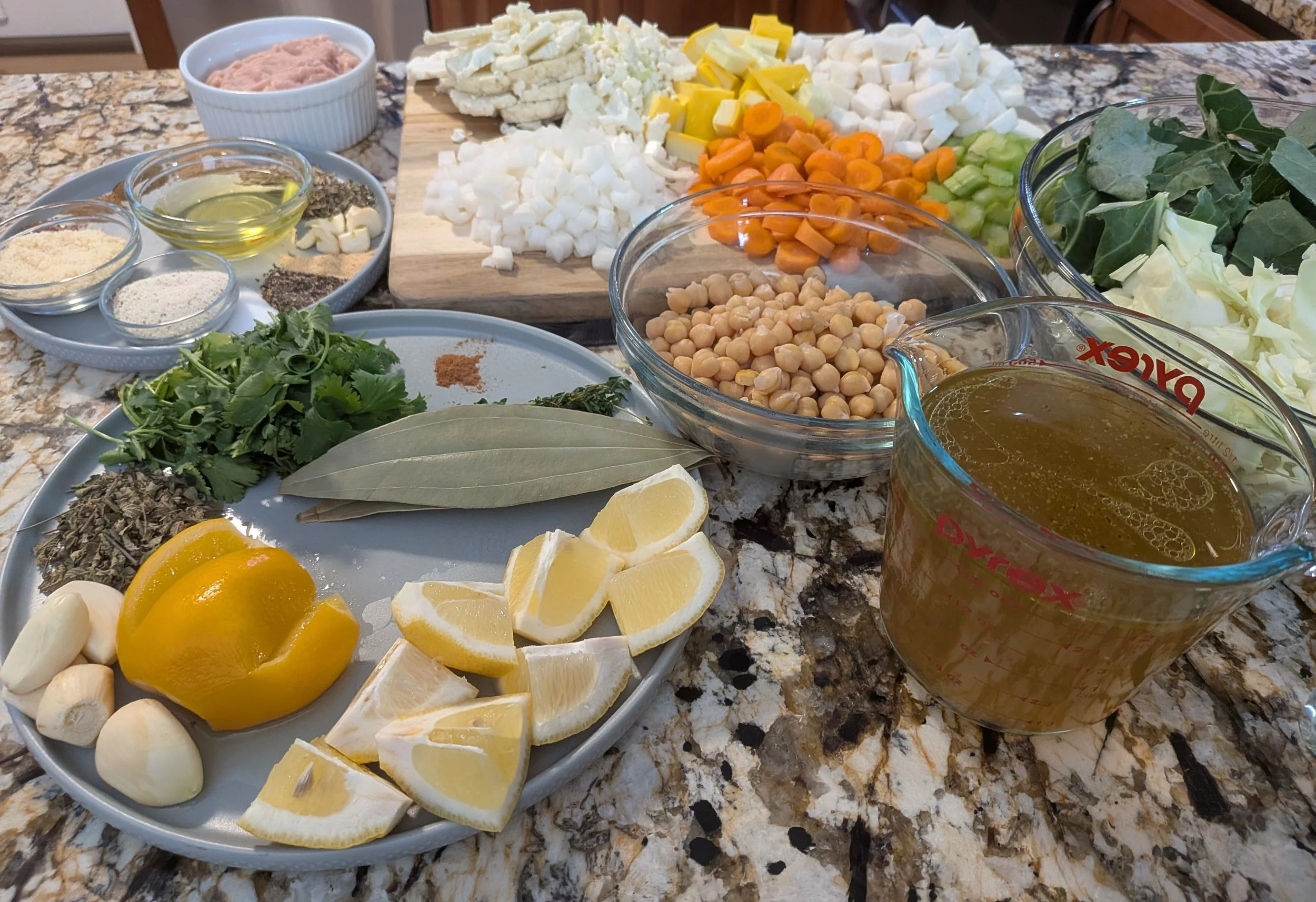
All of the vegetables that love you preparing to come together and become a fantabulous meal!
I Love You Soup
I created this recipe to pack in as many vegetables in a single serving as possible while still keeping the K+, PHO and PRO counts as low as possible. This soup loves you, not just because it is pretty low on the daily counts, but because it is nutritious, balanced and completely adjustable. I made this recipe and used chicken to add a hard protein, but you could substitute boiled eggs, or don't add a hard protein source at all! The soup will still work beautifully. There are two different counts for our CKD buddies and for our DASH buddies; with the chicken meatballs and preserved lemon, and without the meatballs and preserved lemon...but do try the preserved lemon. It will delight you!
Servings size: about a heaping cup
This recipe makes 10 servings
CKD Buddies
With Meatballs and Preserved Lemon: K+ 419mg PHO 138mg PRO 8g
Without Meatballs and Preserved Lemon: K+ 345mg PHO 81mg PRO 3g
(Preserved Lemon: K+ 80mg PHO 10mg PRO 0g)
DASH Buddies
With Meatballs and Preserved Lemon: ½ PRO, 2 ½ V, ¼ FA
Without Meatballs and Preserved Lemon: ¼ PRO 2 ½ V (negligable FA)
Recipe - just the soup:
2 TBSP olive oil
1 cup onions - sliced or diced kinda medium - your choice
1 cup baby carrots - cut bite sized
½ cup celery - cut bite sized
1 ½ cup turnips - cut bite sized
2 cups chopped or sliced cauliflower
2 cup chopped collard greens
2 cups chopped green cabbage
3-5 cloves or garlic (or how ever much or little garlic you love)
1 15.5oz can of garbanzo beans - drained, rinsed, leached, then rinsed again
1 cup yellow squash - cut bite sized
1 cup of frozen asparagus
½ cup minced cilantro
1 preserved lemon
6-8 cups of water (or broth if you’re feelin’ it)
2 bay leaves
1 tsp dried oregano
1 tbsp fresh or 1 tsp dried thyme
Salt and pepper to taste
Meatballs: (Remember, these are optional!)
8 oz ground chicken - I prefer to use dark meat
1 clove of garlic
1 tsp garlic powder
⅛ tsp nutmeg
⅛ tsp clove
1 ½ tsp fennel
1 tsp salt
1 tsp pepper
1 tsp granulated garlic
1 tsp oregano
1 ½ tsp brown sugar
½ tsp red chili powder (or ¼ tsp chili flakes)
2 tbsp grated parmesan cheese
1 ½ tbsp dried malto-meal
Falafel with Tzatziki and a Cucumber, Tomato Salad
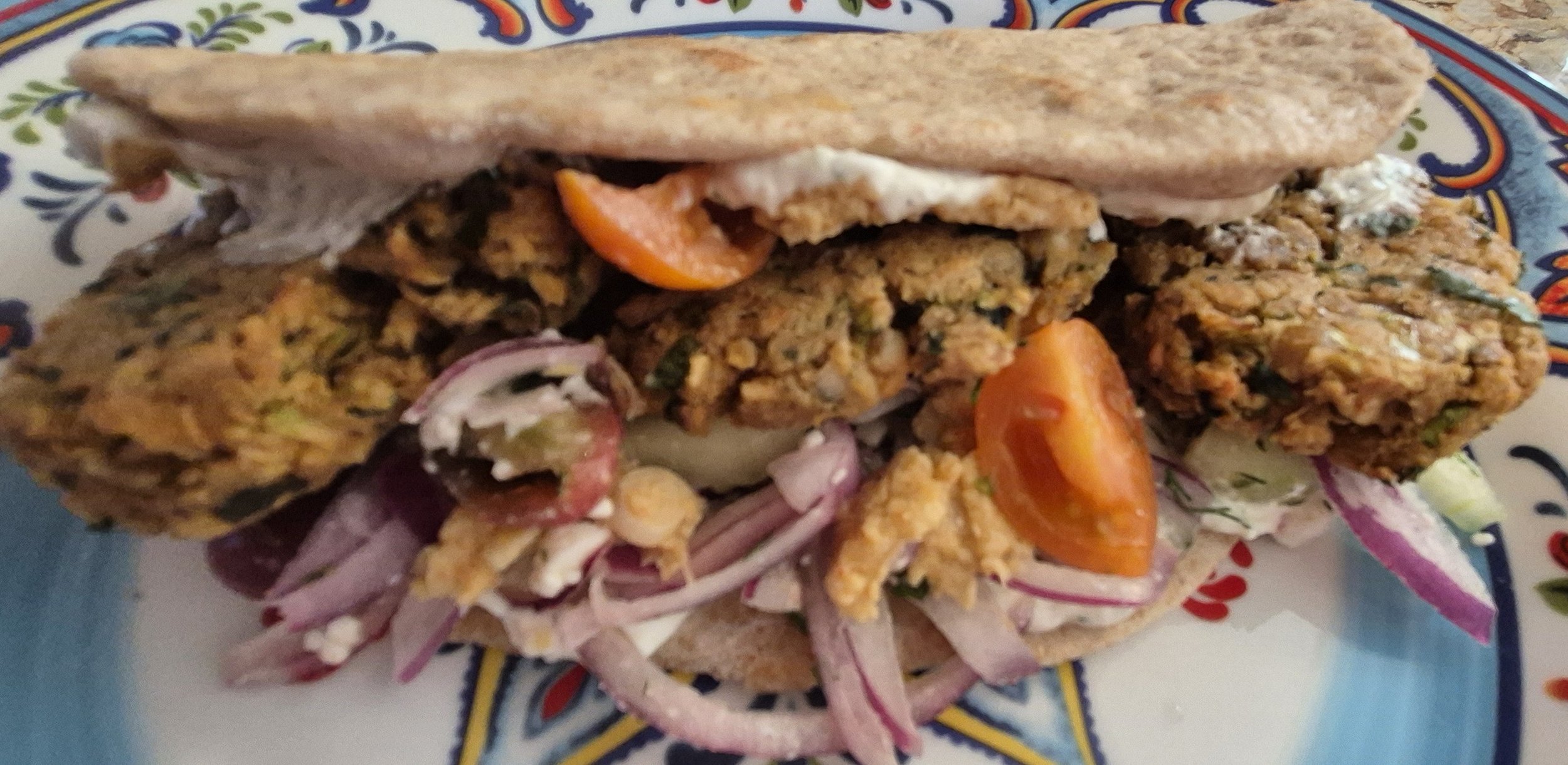
MMMMM - Falafel!
Falafel is one of my very favorite foods. For me, it is basically a love language. Come to think of it, so is Tzatziki…
This is a nice, cool dish to have as a sandwich on a hot day, as something warm and filling on a cold day, and something to share to make a beautiful day even more beautiful! Here’s my adaptation - I hope you enjoy it!
Falafel
CKD: cost per patty is K+ 51mg, PHO 25.5mg, PRO 1.5g
DASH Diet: 3 patties is 1P, 1/2 V, 1 FA
12 patties:
Recipe:
-1 15.5 oz can of garbanzos: drained, leached, and rinsed
-1/2 C Green Onions
-1/2 C onion or shallot
-3-4 cloves of garlic minced
-4 tbsp (1/4 C) matzoh meal (OR Malto-Meal - that works, too!)
-1/2 C finely chopped cilantro
-1 tsp Cumin
-1 tsp paprika
-1/2 tsp each coriander, salt and pepper to taste
-1 tsp baking POWDER
-2 healthy TBSP olive oil (may need more to get correct texture, adjust as needed)
Preheat oven to 400. Whir ingredients to a nice, coarse paste in a food processor or blender. Allow to rest at least 15 minutes before shaping into 12 balls. Place the balls on a baking sheet, smash flat and kiss them with a little olive oil. Bake 8-10 minutes, flip, and then bake 8-10 minutes more depending on how firm you like them!
Cucumber Salad
CKD: K+ 132mg, PHO 160mg, PRO .5g
DASH 1/2 V optional .25FA if using olive oil
12 Servings at 2TBSP each
Recipe":
-2 cups peeled and sliced cucumbers
-1 cup cherry tomatoes cut into halves or quartered if they are on the larger side
-1/2 cup sliced onions (any kind you like)
-1/4 C feta cheese crumbles-
1 tbsp each fresh dill and fresh mint OR 1 tsp of dried dill and mint
-optional: 1 tsp red wine vinegar and 1 tsp olive oil, or 1 tbsp of your favorite Italian dressing
Tzatziki
CKD: K+ 36mg, PHO 17mg PRO .5g
DASH: 1 FA. .25 V
12 servings at 2 TBSP each
Recipe:
-1 cup regular fat sour cream
-1/2 C finely chopped green onion
-1/2 C peeled and grated cucumber
-1-2 cloves of garlic - also grated
-1/2 TBSP each fresh dill and mint minced finely OR 1/2 tsp each DRIED dill and mint
-the juice of 1/2 of a lemon
-salt and pepper to taste
Kinda Kimchi
Kinda Kimchi
Makes about ten 1 cup servings
(on my video, I make a double batch)
CKD: K+ 171mg, Pho 25mg, PRO 1g
DASH: 2V
Cabbage. It's one of the few things on this planet that proves Mother Nature is not totally against us. Cabbage defies her in that it loves us and wants only to take care of us and keep us strong, healthy, nourished, and satiated - which it has been doing world-wide for over 2500 years! Yup, it's an Old World food, or if you prefer, it's O.G. Cabbage is versatile, inexpensive, keeps a while in the fridge, is very nutritious, and low in potassium and phosphorus - raw or cooked! Bonus!
I call this recipe Kinda Kimchi because it’s mostly the same ingredients as vegan kimchi except it is not fermented (it's more like a slightly brined salad), it uses MUCH less salt, and you can use whatever kind of chili you like. I use gochuhjang, California red chili flakes, and New Mexican red chili powder because this combo is spicy, sweet, and slightly earthy. I will give some suggestions in the ingredients list for you, but please use what you like!
Also, I use a mix of cabbages and the counts above reflect that. If you want to keep your counts lower, use only green cabbage instead of the variety. The recipe works just as well - I promise.
And lastly, if you think you are going to have too much dressing/sauce, use a little more than half of it for the kinda kimchi, the rest to marinade some chicken or tofu. Or use it to dress some fresh cucumbers or canned bamboo.
Sauce:
2 tablespoons light soy sauce
3 tablespoons Gochujang (or gochugaru, aleppo, harissa, sriracha, or whatever your fav choice of chili powder or paste may be)
2 tablespoons olive oil
1 teaspoon sesame seed oil
1 teaspoon sugar
1 teaspoon ground black pepper
2 tablespoons of grated ginger or ginger paste
3 to 5 cloves of garlic, chopped finely
optional 1 teaspoon of hot mustard or horseradish
Mix these ingredients together in a small bowl and set aside to flavor-meld.
Salad: (this is NOT the doubled version in the video)
3 cups green cabbage, cut into bite-sized chunks
3 cups of napa cabbage, cut into bite-sized chunks
2 cups of bok choy, stalks cut into ¼ inch slices, leaves sliced a little thicker
¾ cup or a medium onion (any variety - I usually use a white onion)
¾ cup green onions, tipped and cut into 1 inch pieces
¼ cup chopped parsley (absolutely, cilantro works just as well!)
3 tablespoons of coarse kosher salt
If your cabbage is dry, pour in about 2 tablespoons of water
Place the cabbage(s) into a large metal bowl or pot. Sprinkle in the salt and then use your hands to mix it all in. Cover the pot or bowl and let it sit for about 3 hours. Give it a stir every hour just to turn the cabbage around in the salt solution.
When the three hours are up, transfer the cabbage into a colander and rinse the salt off. Then dry the cabbage either by placing it in a kitchen towel and squeezing the water out, or use a Salad Spinner. It doesn't need to be completely dry, damp is good. Put it back in the pot or bowl and add in the onions and as much of the sauce as you deem good. Store this in containers or jars that have lids. It needs to flavor-meld for at least an hour, and is perfect the next day. This will hold for about a week. It eats well cold as a salad, or cook with it, serve it over hot rice or noodles, in soup, or do like I do and walk around the house eating it straight from the jar. Only your cat will judge you.
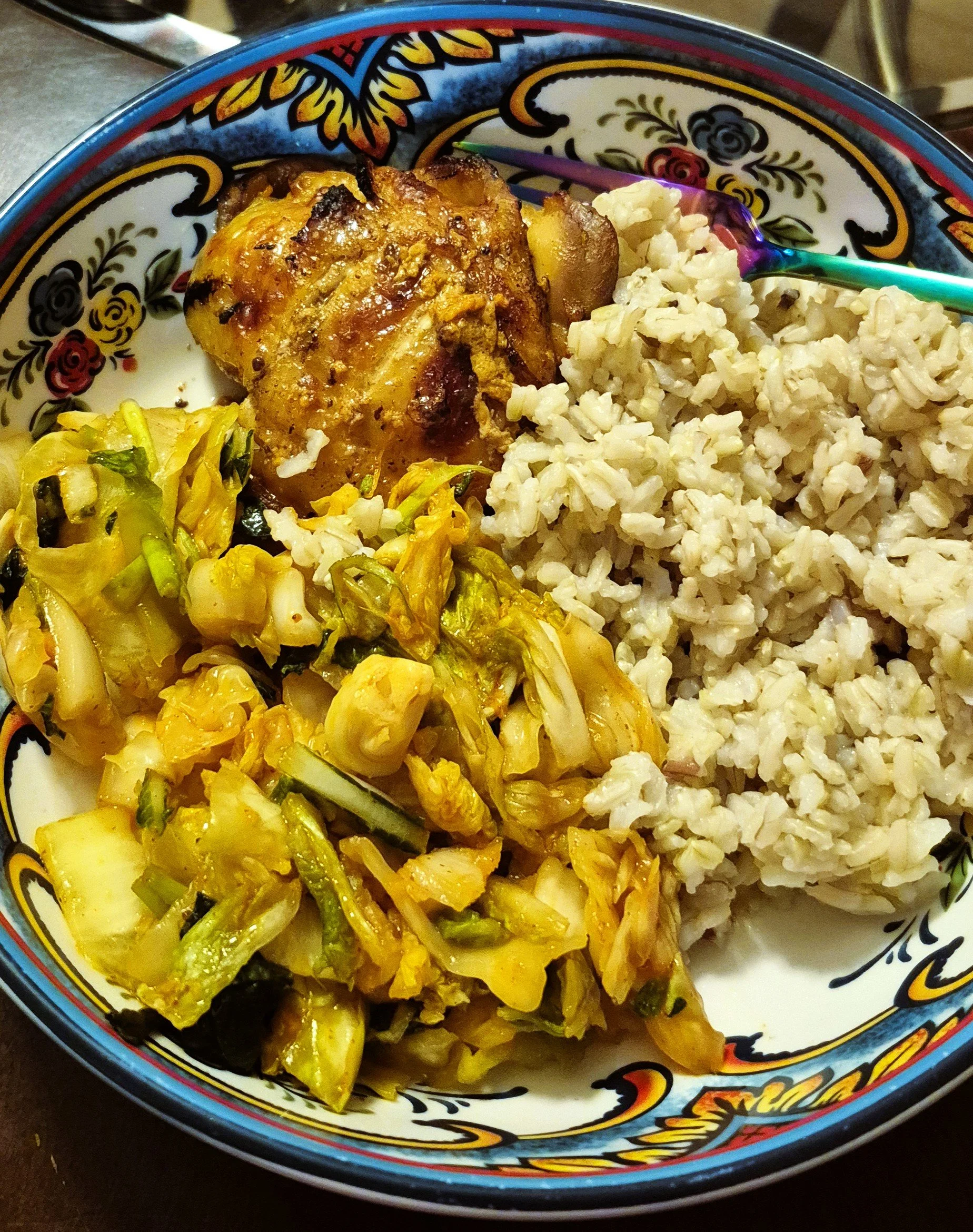
Tomato Free Shakshuka
Serves 5
CKD: K+ 564 mg, PHO 185 mg, PHO 7.5 g
DASH: 3V, 1FA, 1.25P
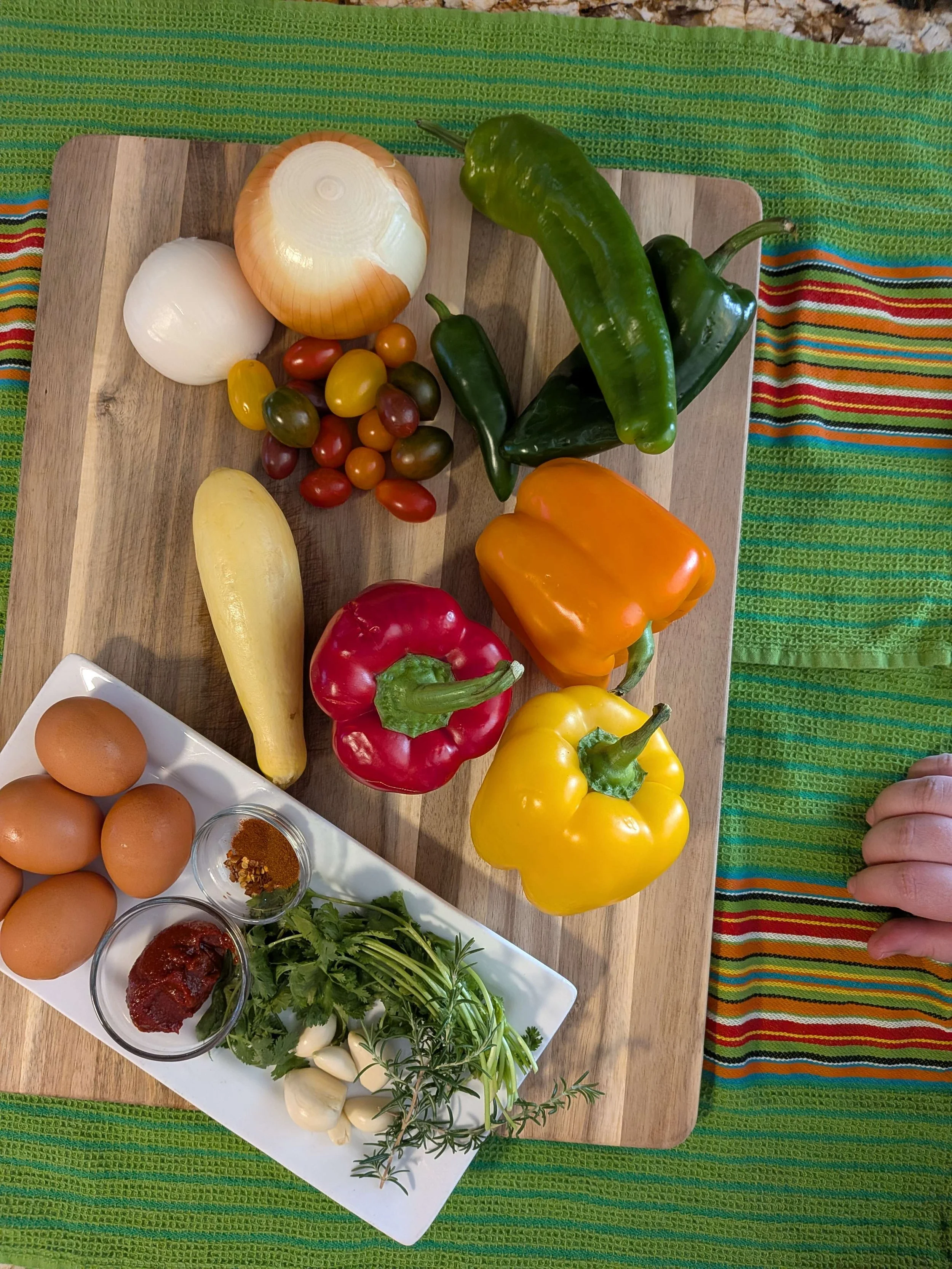
Shakshuka is an egg dish that originated in Africa but quickly spread to the Middle East and southern Europe and it’s easy to see why: it is simply delicious. It’s not just delicious, it is comforting and still somehow lively and happy. Traditionally, it is a spicy tomato-based stew where the eggs are dropped in and poached at the very last. My CKD-friendly version holds true to everything but the tomato-based part. Instead, I use red, orange, and yellow bell peppers because tomatoes just don't love the CKD crowd as much as peppers. I love this dish dearly and serve it as a solid, nutritious breakfast, as a healthy and satisfying lunch, and it is simply divine as a dinner dish - and I've served it with pita, good toasted bread, tortillas, and even matzohs! Also, you can make this as mild or as spicy as you like. I like to take a walk on the mild side - my spice combo is bold, but balanced.
Another great thing about this dish is that you can use whatever veggies you'd like in it. If you are new to cooking or new to the joy that is shakshuka, use this recipe as more of a guide - it will not fail you. I'll give the ingredient listing and preparation instructions, and then at the end I'll give some “add-ins” ideas and hopefully it will inspire you to make this dish your own and a regular part of your meal arsenal!
2 tablespoons of olive oil
3 good sized red bell peppers - or any combo of red, orange, and yellow, sliced thinly - about 3 cups
1 large onion or 2 small onions, sliced to about the same size as the peppers - about 2 cups
1 large fresh Anaheim pepper, sliced thin or diced small (your taste) - about ½ cup
1 fresh pasilla pepper, sliced thin or diced small - about ½ cup
1 medium fresh jalapeno - diced small!!! - about 1/4 cup
3 (at least) cloves of garlic, sliced (use as much or as little as you like!) I use about 5.
1 medium sized yellow squash, sliced to about the same size as the onions and peppers - about 1 ½ cup
¼ cup chopped parsley (use the stems!!! They're good for you!)
¼ cup chopped cilantro (same, use the stems!!!) optional
¼ teaspoon chili flakes
1 teaspoon of your favorite chili powder
*1 good tablespoon of gochujang (or gochugaru, harissa, aleppo) this is not just for spice, it’s also for color
1 good pinch of dried oregano - or use your favorite Italian seasoning, dried mint works absolutely beautifully, too!
salt and pepper to taste
5 eggs
¼ cup feta or your favorite variety of cheese!
Before we start on the instructions, let's talk about the use of fresh chili peppers. I use the Anaheim and pasilla variety specifically because they have a nice peppery flavor with little to no “bite.” They just taste fresh and green, and they give the body this stew needs. Tomatoes and chili peppers are close cousins in the nightshade family and share some very similar qualities. If you want more “fresh” heat, I suggest poblanos, hatch, aji dulce, serrano, or guajillo. These varieties are local to me, so use what is local to you and that you enjoy!
Turn your hob on to medium and heat your favorite skillet for a minute or two, then coat the bottom with the olive oil. Heat the oil just until it shimmers, then add your onions in and sautee them for 3-5 minutes - the ends should just be translucent at this point. Add your bell peppers and, if you're feeling it, ¼ cup of water. Stir and cook uncovered for a minute or two, then cover and cook for about 5 minutes. The goal is to cook them to soft without browning the onions, so adjust your heat and add a little splash of water if the pan dries out.
Once the onions and peppers are soft, add in your garlic, squash and your spices. Let these cook together covered until the squash is tender - about 3 - 5 minutes. Once soft, remove about 2 good ladle fulls and place either in a food processor, a blender or if you have an immersion blender, those work the best. Whir this bunch of goodness to a thick liquid and add it back to the pan. Cook for a few more minutes and then it’s time to add your eggs!
Yes, we are going to poach some eggs. If you have not poached an egg before, or you have and it was more of an adventure than a cooking method, fear not. Poaching eggs in a nest of veggies is SO MUCH EASIER than dropping them in boiling water. You will not get those eggie angels, and if the yolk breaks, well that's just a little color to the stew! Here's the best way:
Get a small bowl or ramekin to crack your egg into. This will help if you need to fish out any shell, and gives you control of where the egg will drop.
Make a little indentation in the stew to nest your egg.
Nest your eggs in a circular pattern, saving the middle spot for last.
Cover your pan and don't lift the lid up for about 4-5 minutes. This is when you can start checking for your desired doneness. I like mine cooked medium, so that's how it's done in the video.
Once your eggs are done, sprinkle the feta (or your cheese of choice) over the stew and maybe drizzle a little olive oil on top - or don't. That's up to you!
That's it! That is my CKD friendly adaptation of shakshuka. I hope you try this recipe and adjust it to become your own! As promised, here's some goodies I like to add in when I have the space in my daily plan:
1 cup of Nopalitos - this is cactus and it's amazing. I also add a little of the juice because it is tasty and will help thicken the stew.
Garbanzo beans! Just remember that they will need to be leached before adding them in *drained and boiled in water for about 5 minutes
Leafy greens - my favorite to use are collard greens and salad greens, but if you want, you can use spinach, kale, escarole, etc.
Artichoke hearts - just…ermagrsh…yum!
Cucumber and Apple Banchan (Salad)
05 April 2026
I reverse engineered this recipe from a Korean Barbeque place my family frequents. It is a brined salad; salty, sweet, crisp, and cold - and it is always refreshing. It does need to flavor-meld in the fridge for about an hour before eating, and it is even better the next day. If kept in a tightly sealed container, it will hold for over a week - but it will be gone before you can find out! This salad is on my weekly rotation because it truly makes me mellow-happy when I eat it and I'm thrilled to share it with you! I hope you enjoy it!
Just a quick note: The focus is on the brine - which is 2 cups. You will have a lot of brine to salad ratio in this recipe so you can literally use half the brine in the salad and store the rest for future use - it has more of a half life than a shelf life, but you will probably use it again next week! Or, you can thinly slice ginger and store it in the remaining brine for pickled ginger - also delicious, refreshing, and perfect in just about everything!
Serves 6
CKD: K+ 122mg, Pho 19mg, Less than 1g PRO per serving
DASH: 1 FR, 1V
Brine:
1 cup boiling water
¾ cup rice vinegar
¼ cup apple cider vinegar
1 tablespoon grated ginger or a good thumb of fresh, peeled and sliced thinly (preferred)
1 ½ - 2 tablespoons of sugar
½ to 1 tablespoon of coarse kosher salt
10 cloves
Pour the boiling water and vinegar in a bowl and then add in all of the other ingredients. Mix to dissolve the sugar and salt then set aside to cool and flavor-meld while you make your salad.
Salad:
2 cups of peeled cucumber, sliced in half lengthwise and then cut into ⅜ to ¼ inch slices (this is 2 American Cucumbers or 1 large or 1 ½ medium hothouse (English) cucumbers,
2 cups of your favorite firm apples, sliced to about the same size as the cucumbers - this is 2 medium apples or 1 large one. Honey Crisp, Pink Ladies, Envy…anything firm that will bake well will work. I like sweeter apples. Feel free to go tart if that's your groove!
1 cup onion sliced to about the same size as the apples and cucumbers. This is 1 small onion or half of a large one. I usually use white onions, but sweet onions work just as well.
Optional: a few finely chopped mint leaves, rosemary leaves, or parsley leaves add a soft little kiss to this salad.
Simply place the chopped veggies and optional herbs into the brine, taste the brine to adjust seasonings (sweet, salt, cloves, ginger), cover and let chill for about an hour. Store in a lidded container!
Thank you for the read and keep on bein’ groovy!
-Sparks
Brown Rice with Greens and Sausage
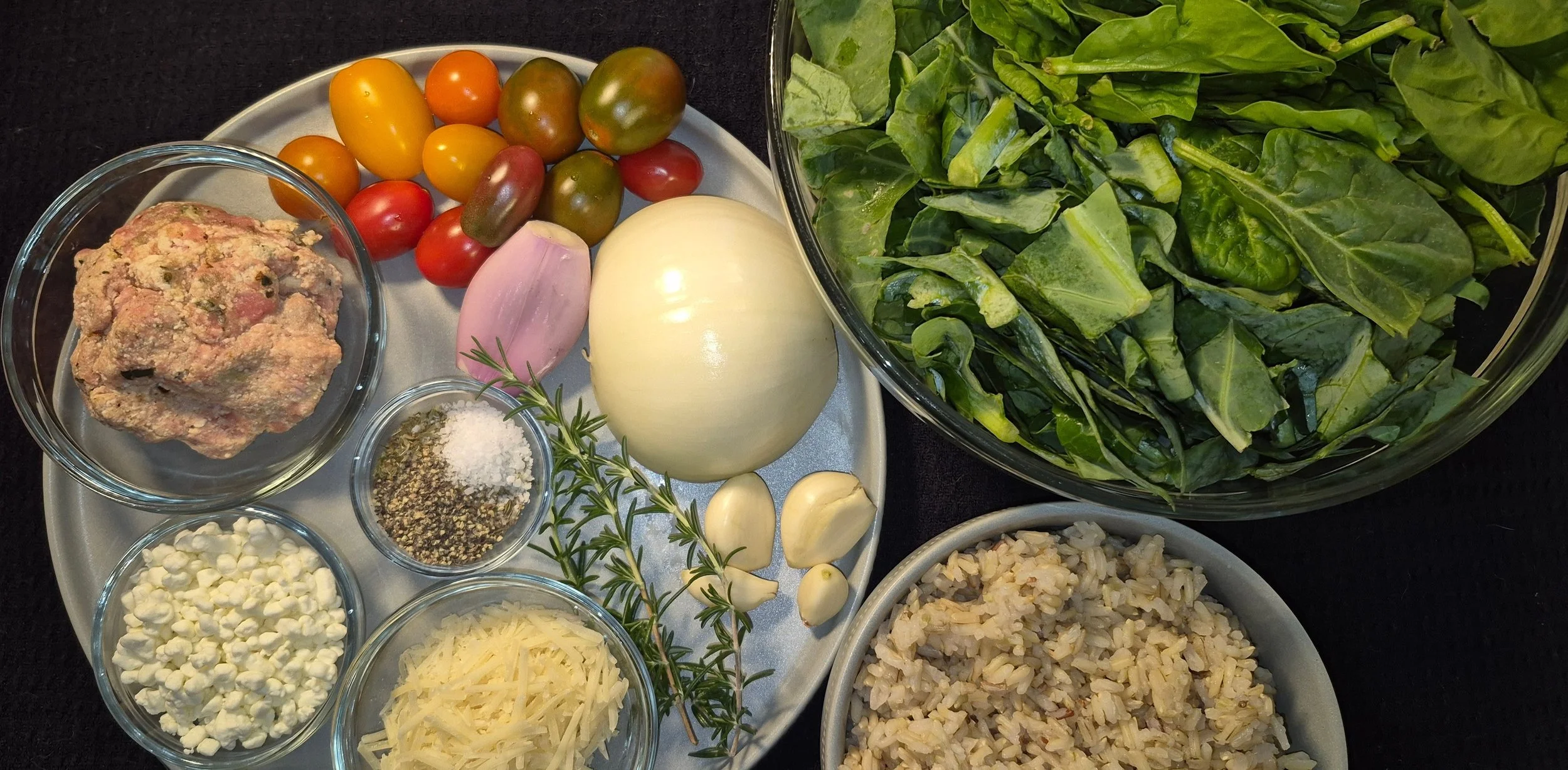
Simple, delicious hot or cold, and ready in about 15 minutes!
5 servings
Count for this recipe: K+: 294mg, PHO: 191mg Pro: 12g
Count for recipe on video (using spinach & collards): K+: 436MG, PHO: 237MG, Pro: 14g
DASH count: 1.5 GR/BR, 1V, 1.5P, 1FA
I love this recipe. It’s quick to make, satisfying to eat and always tasty. It is delicious served warm and excellent cold - so it’s perfect year ‘round! The turkey sausage can be substituted with any other kind of sausage, beans of any kind, or just leave the protein source out. Use white rice instead of brown rice, use mozzarella instead of feta… the recipe is still going to work - just remember to adjust your nutritional count!
Recipe:
5 oz of Home Made Turkey Sausage (or Turkey/Tofu sausage - see recipe on this site!)
4 cloves of garlic, sliced thinly
4 cups of collard greens
1 cup of diced onion
2 TBSP olive oil
¼ c parmesan cheese
¼ c feta cheese
2 cups prepared brown rice
Salt and pepper to taste
¼ tsp chili flakes
1 tsp Italian Seasoning, or fresh rosemary, fresh oregano, fresh basil…whatever you like!
Instructions:
Heat your favorite skillet over medium heat for about a minute, then drizzle in your olive oil. Let that heat up until the oil starts to shimmer (so pretty!) then add in your sliced garlic to the edge of the pan. We don’t want it over the full heat at this time, so keep it cooking on the side of the pan. Let the garlic warm up just until you can smell it, then add in your diced onion. Stir together and sautee over medium to medium low heat until your onions become translucent, so about 5 minutes or so - no browning!
Next, add in your sausage (if using). Let this cook for a little bit before really starting to break it up into crumbles. You will want to cook the meat through before adding in the remainder of ingredients. If you are not using meat, move on to adding your collard greens and your spices. Add in a couple of tablespoons of water to the pan, cover and let the leaves wilt down. Once the greens are wilted, add in your rice (and beans if you are using them), and your cheeses. Cook until the rice has warmed through!
If you are going to eat this dish cold, add a splash of red wine vinegar to give it a little taste of sparkle! Let it cool it on the counter just until you can touch the side of the pan - it should feel on the hotter side of warm - then immediately put it in the fridge. Rice develops bacteria rather quickly when it sits out at room temperature. Be safe, go hot to cold as quickly as possible!
Thank you for the read! Please connect with me if you’d like to share a recipe or if you have one you’d like me to help you adapt! New recipes are the best recipes!
Keep bein’ groovy,
Sparks
Spinach and Collard Greens Pesto
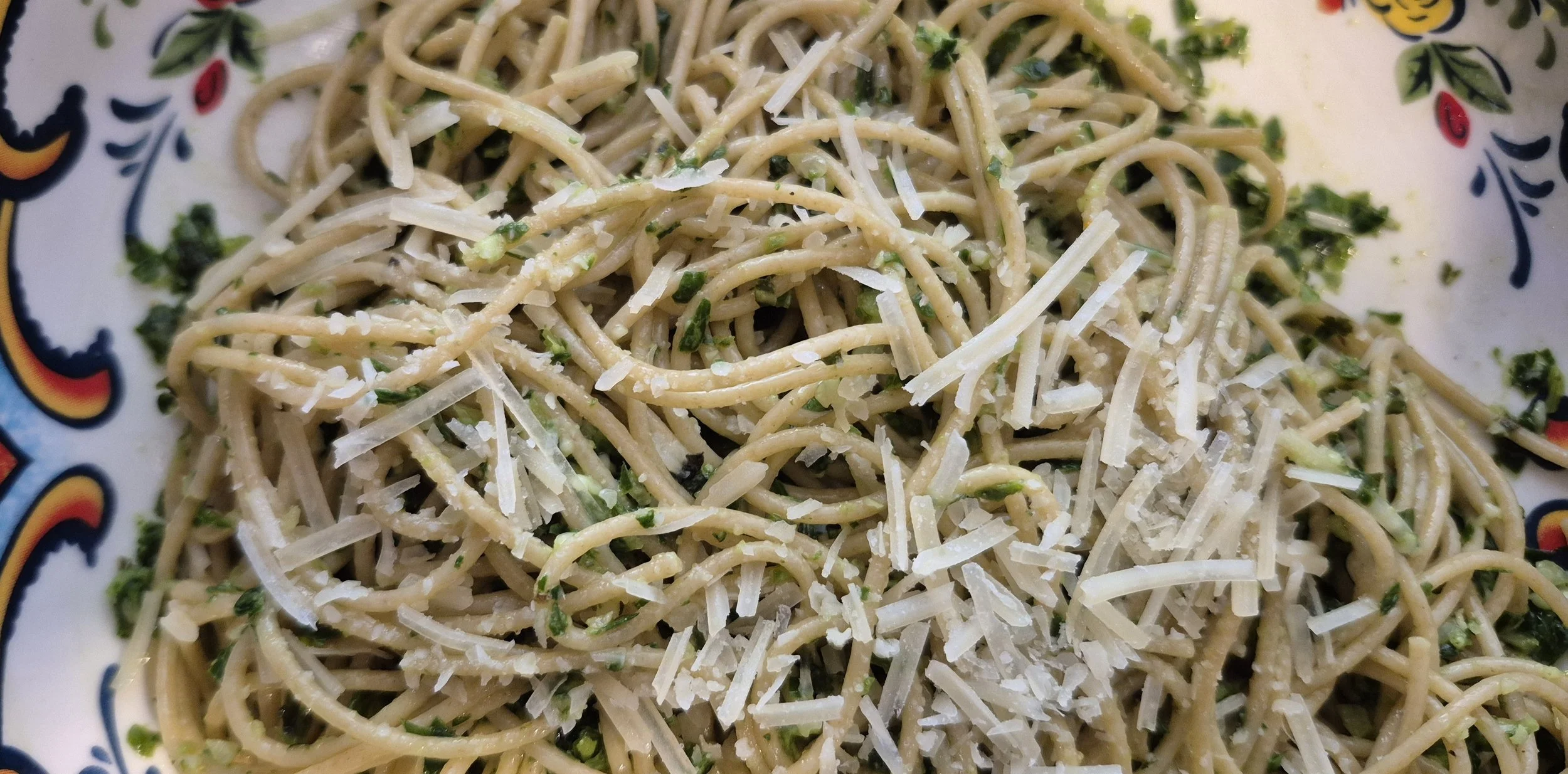
Pesto has become one of my closest friends since tomato sauce became a holiday food. Generally here in the US, pesto is primarily made with sweet basil. Well, basil is really high in potassium and I’m really not that fond of it. In Sicily, where pesto originated, it is made using just about any vegetable that can be ground into a paste (pesto literally means paste). I’m using collard greens and spinach for this version - spinach is expensive on the K+, but it has other nutritional value - so I used it on the video, but please experiment! Try turnip or mustard greens! Celery leaves work amazingly well and are so cool and refreshing in a cold pasta or rice dish. I’ve used cooked asparagus, Spring mix or 50/50 salad mix, and artichoke hearts (expensive on the points, but sooo worth it). Sun dried tomatoes…yummm.
Here’s the count using just collard greens:
K+: 81mg PHO: 69mg Pro: 6g
Here’s the count using the recipe on the video - collard greens and spinach:
K+: 111mg PHO: 71mg Pro 5g
DASH count: per serving: 1V, 1P, 2FA
*Remember, if you are using other veggies for your sauce, please adjust the counts!
RECIPE
Makes 6 servings
4 cups (tightly packed) uncooked collard greens - washed and stemmed. I use the kind in the bag mainly because I eat a lot of collards every week. Go ahead, treat yourself to some convenience!
3-5 cloves of garlic - this is to your taste
¼ cup macadamia nuts
¼ cup parmesan cheese
¼ cup (and maybe a couple of tablespoons more) olive oil
1tbsp fresh lemon juice
¼ tsp chili flakes (optional)
Salt and pepper to taste
Put the garlic, nuts, and cheese in the food processor and pulse it until you get small crumbs that are pretty uniform in size. Then add 2 cups of your greens and half of the olive oil. Whir this into a coarse paste. Do not liquify it or it will be texturally gross. Put this mixture into a decent sized bowl. Then put the other 2 cups of the greens, the lemon juice, and the spices in the processor with the other half of the oil. Whir these together until they are the same texture as the first batch…you might need to add a little extra oil - don’t be shy about it. Combine the two batches and mix together well. You can use it right now, but if you let it flavor meld for about a half an hour, it will be much tastier…and even better tomorrow. This will sit in the fridge for about 4 days, and freezes like a dream! So easy, so tasty. It’s simple food that loves you!
Food Journaling 101
14 April 2024
So, I realized that in the prior blog post that I stressed the importance of journaling your daily food and water intake, but didn’t give any resources or guidance for anyone new to an eating plan. I am so very sorry!
Keeping a log of your daily food intake really is tedious until you get used to doing it. It becomes a habit after a while, but until that time you have to be purposefully diligent in writing down everything you consume. Let’s go over the “why” first, and then we will talk about the “how.”
Why do we need to keep a food journal?
Whether you are eating for diabetes, cardio/hypertension, CKD, or just to shed some unwanted pounds you have daily limits that you must adhere to and keeping honest records of your daily eating shows you your progress over time and sets the benchmarks for your success. It lets you know where you are in your day’s allotments so you can prepare yourself for unexpected cake, spur-of-the-moment dinner with your sister, or plan for an evening of Mexican food and movies. Keeping a journal leaves a history of meals and food combinations that you enjoyed and that worked well for you, and bonus, Yo, lists their nutritional count so you don’t have to calculate them again! It’s also a record of those days where you weren’t at your best. Your food log is you talking to your future self - so while you are writing down the embarrassment of that Frap beverage you got yourself at the green coffee chain on every corner, forgive yourself by moving forward and jot down some words of inspiration and cheerleading. Remember that treats, cheats, and holidays happen. Your success depends upon your ability to make those moments few and far between, and to get right back on track. Journaling is you being accountable for your eating behavior and responsible for keeping yourself in line. And it works.
What’s the easiest and best way to keep a food journal?
There is no singular best way. It’s a very personal and individual thing, so you have to find what works best for you. There are some who can keep everything on their phone or who create a spreadsheet for themselves. Others need a preformatted journal, which you can purchase online or even at Wal-Mart - they are not very expensive and come in many styles (i.e. what information they record). I, myself, am a knight of pen and paper and use graph paper and a three ring binder. I tend to write big and sheet paper allows me to jot down recipes and reminders - and serves as a place to keep my food lists safe and handy. I also know that ticking off my daily servings as I eat them works extremely well for me. This is years of being an old school Weight Watcher.
Here’s one of my entry dates for you to check out:
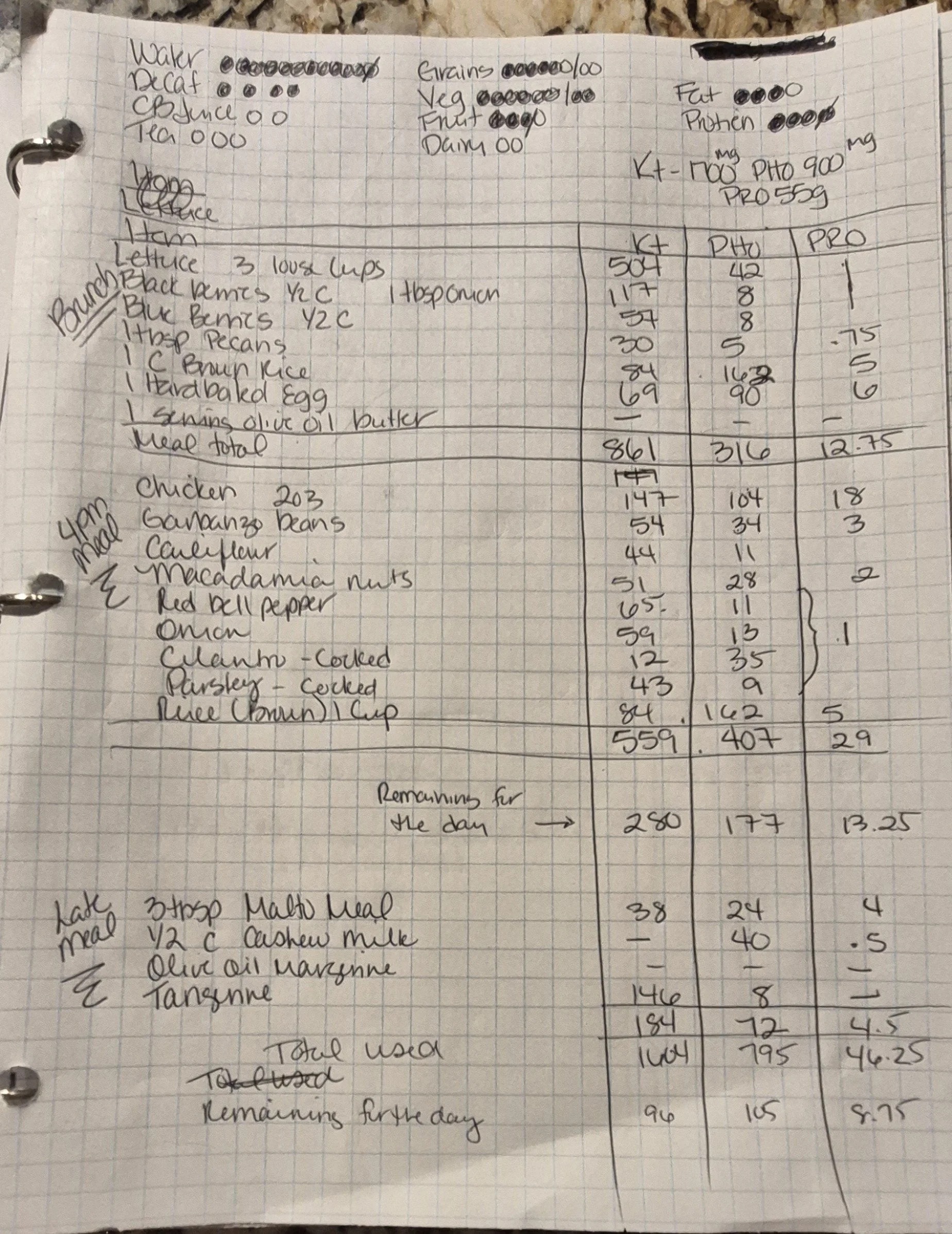
Graph paper RULES!
Notice that at the top of the page, the food groups are listed with circles indicating how many of each I can each day - that is Weight Watcher training - DASH also uses this format. I list my daily limits of potassium (K+) (note that my labs indicate that I can up to 2400mg of K+, but my allergy to it says “No, Sir!”), phosphorus (PHO) and Protien (PRO) at the top of the page, and then I have them broken down into columns. This is so I can list my noms and their values, add them up and check off their little circles as they are consumed. It leaves me a running total of nutritional count and a visual of what options I have left as I eat through my day. I keep myself in line by using my love of lists and crossing off my accomplishments. For me, this works. Mayhaps it will work for you, or serve you well as a guide as you learn what method suits you best!
As always, thank you so very much for the read and please let me know how I can help you with your daily food tracking! My goal is to help make things fun and easy as we walk down our food journey together!
Keep bein’ groovy!
-Sparks
Meal Planning is SO PAINFUL!!
12 April 2026
Meal planning. We all have to do it to some extent. Some of us are good at it, some of us…not so much. In truth, it really does help to budget your daily food intake, and it helps your pocket book quite a bit as well. I am one of those people who is really good at making a meal plan and really bad at sticking to it. So many times I have promised myself that “this time, I’m just going to put the screws in and stick with it,” but my screws are usually a glue stick that was purchased from the dollar store, so my stick-to-it-tiveness very much lacks integrity. I know this about myself and acknowledgement is the first step to recovery, right?
Not keeping to plan is one of the biggest reasons we fall off of the food plan wagon - and there are many reasons we give up on our eating plans: we get bored with the menu options, we get tired of weighing and measuring our food, it’s a pain to keep a food journal, and coordinating a menu to what’s available and on sale at the groceries is a skillset unto itself. Also, sometimes the sample guides we are given read very well, but each meal requires its own shopping list. People with time and money budgets don’t need that hassle.
I have come up with what I call base elements for my weekly eating to streamline the planning process so I can plan by the day instead of by the week, keep shopping consistent, and that keeps my pantry prepared to make a variety of recipes that are filling and that can be mixed and matched without exceeding my daily limits. I still keep an honest food journal, though. We all have to journal in the way that works best for us. Whatever you stick down your gullet…WRITE IT DOWN and account for it! When you are eating for CKD and for Hypertension/Cardio, there are no “free food” options. Everything you put in your mouth has a cost - and for my CKD buddies, this includes water. It’s hard to do at first, but make a conscious effort every day. After a while, it becomes a ritual, and you will memorize the counts on your most eaten foods…in other words, it get’s easier and becomes a habit.
Back to the base elements thing. Here’s the hacks and cheats I use to keep myself on track and I truly hope this inspires and helps you.
Eat a Salad with Breakfast. What. You’ll eat pancakes for dinner and think nothing of it. A loose cup of salad greens tossed with a dram of olive oil and a molecule of light vinegar is refreshing, adds visual “bulk” to your breakfast, and is an easy way to pack in 2 vegetable servings and maybe one or two fruit servings. I usually toss in a serving of blueberries and sometimes mixed raspberries and blackberries, sometimes strawberries, sometimes I chop up a tangerine - but I always add red and/or green onions. You might not dig that, but the fruit helps the onions find their sweetness, and I love onions. Sometimes a little peeled cucumber finds its way in there, but usually I’m just in a hurry. I’m not a morning person, so having a tub of 50/50 or Spring Mix makes things easy.
Always have prepared rice in the fridge. Every country around the world uses rice - there are thousands of recipes based upon it and having it ready saves you time. Yes, refridgerating rice changes the texture, but we rarely just eat a bowl of reheated rice. This is to build recipes - like for fried rice or to add into soups. Besides, rice is very cheap and holds in your cabinet for a long time - white rice does. Brown rice will eventually go wonky, so don’t buy a 25lb bag of it. Cooked rice only keeps for a couple of days, so this is something to make a couple of times a week.
Learn to love the veggies that already love you. There are some veggies that prove Mother Nature isn’t totally against us. These veggies love us because they are low in potassium (K+) and phosphorus (PHO) and keep that low count when they are cooked, and they are used world-wide. They are cabbage (purple and green), cucumbers, onions of all varieties, collard greens, peas, and most varieties of lettuce. Keep some of these already sliced or chopped in the fridge and ready to grab. Yes, I actually cook lettuce and cucumbers sometimes. Cucumbers add a lot of body and a fresh, “green” flavor to stir fries and they are surprisingly delish sauteed with plant-based butter and (pick your variety of) onion. And lettuce? I use my wilting salad greens to make pesto, in soups, and toss them with rice or noodles for both hot bowls and cold spoon salads. Don’t yuck it. It's a good use of food that prevents the costs of waste - and sneaks in good servings of our much needed fiber.
Silk Cashew Milk: I stumbled across this in my mad search for a dairy alternative that was low in K+ and PHO, and that did not contain sea salt - which I am allergic to. It comes unsweetened and is very low in calories, and is lower in K+ and PHO than even almond milk (you do have to look up the full nutritional info on The Internet Oracle). More importantly, it does not have an odd aftertaste or weird mouth-feel - so it cooks and bakes like a dream. Rice Dream is my second runner up, but it has a sort of sweet flavor, and it contains sea salt.
Just use olive oil. And no, you should never think you have to buy an olive oil to sautee and a different one to use in salads. Find one you like and make it your staple. Olive oil does not deep fry well at all, so for that once or twice a year fry-fest, just use vegetable oil.
Eat rice, pasta, and hot cereal every day. On the DASH diet, we get SO MANY servings of grains…mainly because we get so little actual meat and because a high fiber diet eases so many ailments. Rice, pasta, and hot cereals are inexpensive, shelf stable, and can be used for purposes other than intended. For example, I use cream of rice cereal as a thickening agent, and Malto-Meal as a binding agent. I bake with oatmeal all the time. Whole grain pasta, brown rice, and oatmeal are higher in K+ and PHO counts, but their nutritional value is worth the few extra points. There are endless amounts of rice and pasta dishes from around the world so these elements will never get boring.
Eat all the berries. Most berries are on the low K+ and PHO lists and it’s really easy to slip in a ½ cup serving. Frozen is as good as fresh so we have access to them all year long. I use berries in salads, in hot cereal, with rice mixed with honey and pecans and as my TV snack. Pre-wash your berries and store them in lidded plastic containers. If you have a few left over at the end of the week, pop them in a plastic bag and freeze them. Think of these little baggies of numminess as future pies…or crumbles…or bread puddings.
And lastly,
Keep some boiled eggs and boiled chicken handy. Boiled eggs are a fast, hearty, and versatile protein source and so is boiled chicken. More importantly, boiling chicken leaves you homemade chicken broth/stock which you can use in EVERYTHING. Here’s my recipe:
2 or 3 chicken thighs, bone in, skin on
1 tablespoon of Olive oil
5 or 6 baby carrots
2 ribs of celery cut or ripped into 4 pieces each
½ onion, skin on - just cut it in half, maybe trim the little beard hairs off the bottom, and toss it in the pot
At least 2 garlic cloves, skin on…don’t peel them, just crush them a little with the flat of your knife, but keep the hulls intact
A handful of parsley if you have it. Don’t trim it, the stems are as edible as the leaves. Just wash it and toss it in the pot.
A quick dash of cinnamon
Salt and pepper
Optional: a bay leaf, fresh or dried: oregano, basil, marjoram, thyme, fennel, chili powder (for me, that’s not optional)
Heat a large pot over medium heat for a minute or so, then coat the bottom with the olive oil. Let the oil warm for a minute or two, then place the chicken thighs in, skin side down. Let these brown for a few minutes - not too dark, you just want to get a little color on the skin and render some of its fat out. Flip the thighs over and toss in all of the vegetables and spices. Don’t mix them immediately. Just let them flavor-meld for a minute or two, then you can satisfy your need to stir. Add water to the pot to about ¾ to the top and bring this to a boil. Once at the boil, turn the heat down to low, cover and let it simmer for about an hour - you don’t even have to stir it. After the hour has turned, remove the pot from the heat and let it cool for about half an hour. Then remove the chicken and veggies. Discard the veggies, but pull the chicken off the bone and store that in its own container - cooked plain chicken ready to be made into something wonderful, like a curry! Put your broth into a sealable container and pop it in the fridge. Once cooled, it should be a little gelatinous - this is a good thing. You now have broth that can be a soup base, a sauce base, a liquid to boil rice in…so many options. More importantly, you made it, so it’s a thousand times better for you than the store-bought - which is technically contraban.
So, these are the hacks I use to keep myself on track, but that afford me some planned spontaneity in my daily menu planning. I hope these ideas help you build your base. Remember, you should plan yourself some treats, and it’s okay to have an occasional cheat - forgive yourself and get right back on plan. It gets easier over time, and we can always find something fun and interesting to make together. That’s what I’m here for!
hank you so much for the read. Be good and keep bein’ groovy!
-Sparks
My First Ever Video Dropped Today!
https://www.youtube.com/watch?v=Jb2rpJIkpVU
29 March 2026
Thank you for watching my first ever video…that I edited myself…for the first time…ever!
Before I bore you with a solid list of staples for your pantry and fridge, here’s some groovy info for our newly diagnosed CKD buddies.
The American Kidney Fund is a good place to obtain a solid Potassium Food Guide and Phosphorous Food Guide. Having these guides will help you shop for groceries - and you will be surprised at all of the wonderful things you can have! Here are the links for these guides:
https://kitchen.kidneyfund.org/wp-content/uploads/2021/08/Potassium-Guide.pdf
https://kitchen.kidneyfund.org/wp-content/uploads/2021/04/Phosphorus_Guide_090419.pdf
Another great resource (for everybody) is the site Eat This Much. This site can help you meal plan and you can also input individual items and filter it by cooked vs raw, or by the measurement…you can even get a nutritional breakdown of most commercially prepared foods. Here’s the link: https://www.eatthismuch.com
This is a quick listing of the staples I keep in my pantry and fridge. Adventurous (but CKD appropriate) eating has made my stocks and stores vast and voluminous, but it’s actually still pretty basic.
Cereals and grains: Steel cut old fashioned oats, Original Malto-Meal, Cream of Rice, Grits, plain corn meal, non-microwave popcorn, whole wheat thin bagels, raw unsalted pecan pieces and pecan halves, unsalted macadamia nuts, brown rice, white rice, whole wheat pastas, enriched white pastas. If you find pasta/ noodles on sale and the ingredient and nutritional listings meet your dietary needs, pick it up and let’s make something with it!
Baking Items: AP flour, whole wheat flour, self-rising flour, corn starch, baking powder, baking soda, vegan sugar, powdered sugar, brown sugar, molasses, honey, cinnamon, salt, and pepper…I have a lot of spices, but that’s a me thing. You spice you.
Canned Goods: Olive oil mayo, plain ol’ general olive oil, red wine vinegar, apple cider vinegar, rice vinegar, really cheap balsamic vinegar (because it’s a flavor, not an event), canned (in juice) peaches, pears, and mandarin oranges, canned peas, canned garbanzo and pinto beans, canned artichoke hearts (canned in water), canned beets, and light soy sauce. Oh, coffee and teas for brewing.
Fridge Items: Note: Yours will vary here. CKD folks have to limit our milk/dairy intake because it is so high in potassium and phosphorus. We scramble a little to find options because nutritionally, we still need to have 2 servings per day. I had a heck of a time finding an option that met my nutritional needs and that did not contain sea salt. So, my fridge standards are:
Silk unsweetened cashew milk, plant based butter, a block of cheddar cheese, parmesan, low-fat cream cheese, low-fat feta cheese, eggs, tofu, chicken thighs, and ground turkey.
Produce: This is what I keep as standard, but I also buy in-season produce: one-pound tubs of 50/50 salad mix and baby spinach, a bag of collard greens, green onions - lots, parsley, cilantro, celery, baby carrots but not real ones - the kind that are cut with a water saw, onions (white, yellow, red, and shallots), whole clove garlic, bell peppers (but not green ones) SO MANY CUCUMBERS, cabbage, cauliflour, blueberries, strawberries, raspberries and blackberries, a few apples, a few tangerines, lemons, and grapes. Remember, I have food allergies, so my fruit and veggie options are limited. Yeah, I know. Breathing does cause aging, but it’s so fun and has so many other benefits.
I hope you find this helpful! Next video we COOK!!
Before We Dive Into Cooking…

This is me and the very handsome Scooch - one year ago today.
18 March 2026
This is a picture of me one year ago today – it was the day I was diagnosed with hypertension, high cholesterol, being pre-diabetic, and my Chronic Kidney Disease (CKD) was discovered. I was told in no uncertain terms that my weight was not helping and was probably the most major contributing factor. As of today, the 1-year benchmark, I have lost 54 pounds, got my cholesterol, A1C, and blood pressure levels into the safe zone, and my CKD has lowered from level 3B to level 2 – where I intend on keeping it. During this year, one of the things I’ve discovered is that it’s not fear that motivates me to keep on; it’s the quest to find new recipes from all over the world that I can adapt to meet my fresh eating needs – and most are so simple…they’ve gotta be shared!
It’s not a matter of when we start, or where we start; we start now, here in my kitchen. The biggest boon you will give yourself is HOW we start – and that is by going through your fridge, freezer, and cabinets to get a fair assessment of what you have, what you really need to get rid of (whether it’s from age or it’s just an unhealthy item), and to create a list of staples you will need to have on hand.
The second biggest boon you can give yourself is to utilize as few prepared foods as possible.
“Wait a sec, Sparks. What, exactly, is a “prepared” food?
Prepared foods are anything that comes in a bag, bottle, can, carton, canister, wrapper, or box. Basically, if all you have to do is heat-n-eat, it should probably be avoided – but not everything. Some prepared foods that you will utilize almost daily are noodles, canned and frozen fruits and veggies, grains and cereals, bread, coffee, popcorn kernels…you get the gist. Read the labels on EVERYTHING. Label reading is so very important. We are looking for low sodium and with as few ingredients as possible; we want only ingredients that are actual food products and not better living through chemistry. I guarantee that when you look up some of the ingredients put in foods, it will put you off those foods.
Next, we go to the store – and read some more labels! By going to the store, I mean I am taking a video at the store so you can see what I’m shopping for, how I plan on using whatever I find and, of course, show off my mad label reading skills. I’m not asking you to spend a lot of money. I don’t want you to as I most certainly have a worker-bee’s budget. Most of the recipes I will be presenting are very cost sensitive. However, it really can cost a lot to eat healthy, but it shouldn’t and if we do it correctly, it won’t.
A quick reminder: if you are joining me because you have placed on a medically required eating plan, I, myself, follow the DASH (Dietary Approach to Stopping Hypertension) Diet and most of my recipes adhere to the DASH guidelines. I will never say I’m not gonna bake, make candy, or prepare holiday foods, because I will – but I will always specify that those recipes or techniques are a treat and not a daily! Besides, a leg of lamb is usually a treat, right?
Then, after all that, we will start cooking!!!
I will be posting a video about reading labels, auditing your cabinets, and taking a field trip to the grocery store very soon. I just have to figure out how to edit it.
Meanwhile, thank you for the read and keep bein’ groovy!
- Sparks